
What Is Facet5? A Plain-English Guide to the Tool We Use With Every Team
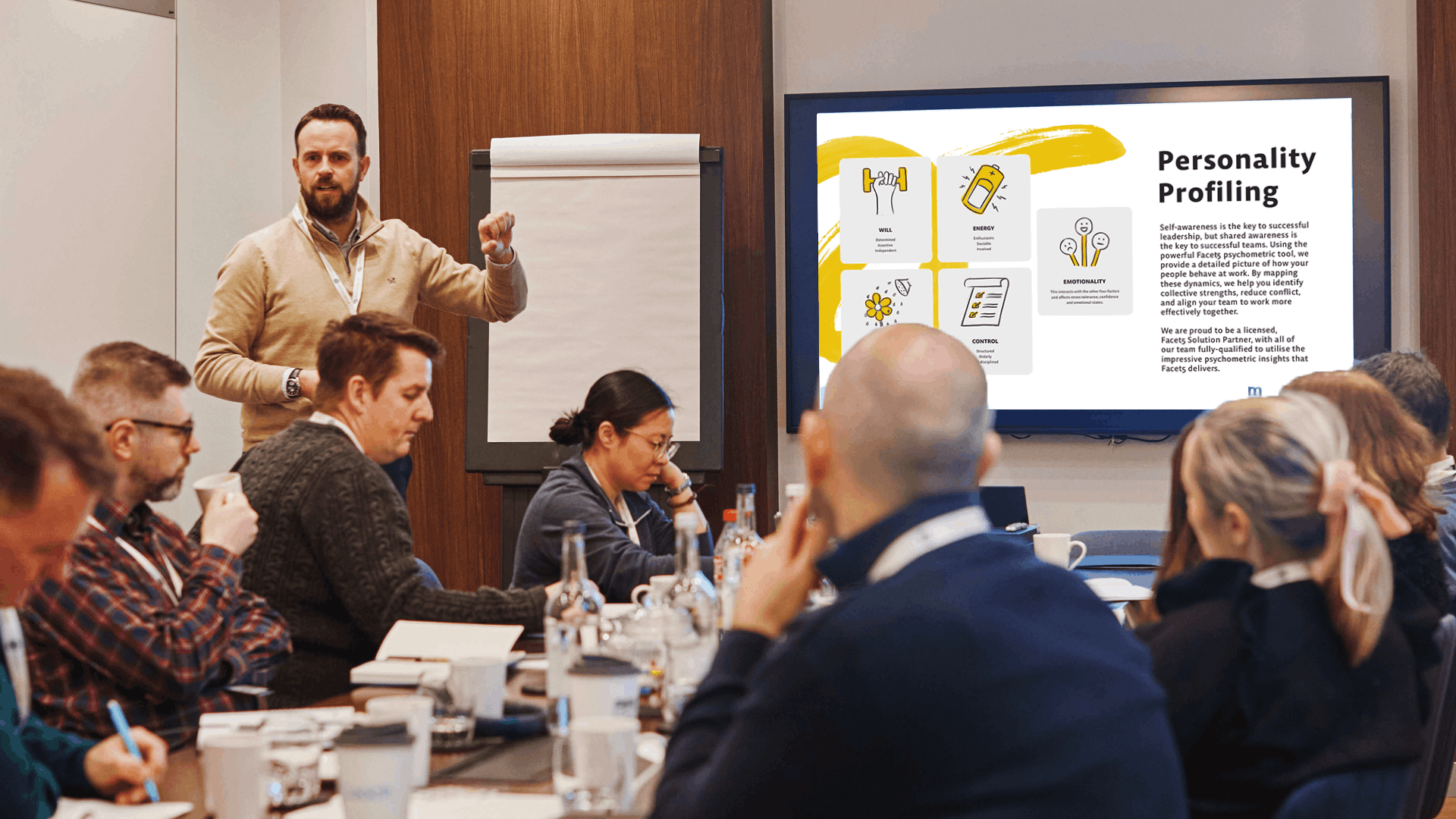
If you've spent any time exploring personality profiling for your team, you've probably come across a lot of jargon — factors, norms, sten scores, radar charts. It can feel more like decoding a spreadsheet than understanding your people.
We use a tool called Facet5 with pretty much every team we work with, and after years of watching what it does in a room, we wanted to explain it properly — not as a glossary entry, but as someone who's genuinely enthusiastic about it.
What is Facet5, really?
Facet5 is a personality profiling tool. It asks someone a series of questions about how they think, behave, and respond to situations at work, and it turns their answers into a picture of their personality across five core areas — or "factors":
Will — how assertive and driven someone is
Energy — how outgoing and sociable they are
Affection — how much they value harmony and consider others
Control — how structured and disciplined they are
Emotionality — how they experience and respond to pressure
Nobody is "high" or "low" in a good or bad way here — it's simply a map of natural tendencies. Someone high in Control might thrive on structure and planning; someone lower in Control might bring energy and adaptability instead. Both are valuable. That's the whole point.
Why does this matter for a team?
Most workplace friction doesn't come from bad intentions — it comes from people not understanding why a colleague works differently to them. The teammate who wants to talk everything through isn't being difficult; they're probably high in Affection and Energy. The one who wants the plan agreed and then left alone to get on with it isn't being cold; they may simply have high Control and lower Energy.
Facet5 gives teams a shared language for these differences. Instead of "they're just difficult to work with," conversations become "I can see we approach decisions differently, and here's how we can work better together."
Honestly, the moment we love most in any session is watching the room shift. There's usually a point, maybe twenty minutes in, where someone reads their profile and says something like "that's so me" — and you can feel the relief in the room. People stop taking each other's differences personally and start getting curious about them instead. We've run this with boards, with front-line teams, with golf clubs and professional services firms, and that moment of recognition happens almost every time. It's the reason we still find this work exciting after all these years.
We use it in three main ways:
Team days — helping a group understand their collective strengths and blind spots
Leadership development — helping individual leaders understand their natural style, and where it might be getting in their own way
Recruitment and onboarding — helping organisations build genuinely balanced teams, not just teams that all think the same way
We've lost count of the number of teams who've told us, after a session, that they finally understand why a colleague operates the way they do — and that understanding alone has done more for how they work together than any amount of process change could.
What does the process actually look like?
It's simpler than people expect:
Each person completes an online questionnaire — about 15–20 minutes, no right or wrong answers
We generate an individual profile report
We talk it through with the person (or the whole team) in a facilitated session, connecting the profile to real, everyday working situations — not abstract theory
That last step is the part that makes the difference, and it's the part we care most about getting right. A profile on its own is just data. A well-facilitated conversation about that profile is what actually shifts how a team works together — and it's why We've built our whole approach around the conversation, not just the report.
Is Facet5 the same as Myers-Briggs?
It's a question we get asked often, so worth answering directly: no. Myers-Briggs® sorts people into fixed ‘types’. Facet5 measures where someone sits on five continuous scales, which in our experience gives a more nuanced, less boxed-in picture — and one that's built specifically for workplace behaviour rather than general personality typing. Both have their place; We simply find Facet5 gives teams something they can act on immediately.
Myers-Briggs® is a registered trademark of The Myers-Briggs Company.
Getting started
If you're curious what a Facet5 profile would reveal about you or your team, the best way to find out is to experience it — not just read about it. We'd love to show you.
Book a Facet5 taster session with me →
FAQs
What is Facet5 used for? Facet5 is used to understand workplace personality and behaviour, helping teams improve communication, reduce conflict, and build on their collective strengths.
How long does a Facet5 questionnaire take? The questionnaire itself takes around 15–20 minutes to complete online.
Is Facet5 the same as Myers-Briggs? No. Facet5 measures five continuous personality factors rather than sorting people into fixed types, giving a more nuanced picture suited to workplace behaviour.
Who is Facet5 suitable for? Facet5 is used with individuals, leadership teams, and whole organisations — from personal development through to recruitment and team building.